
By Janie Oates (IML)
In 2014 Janie spent 3 months cycling across Peru where she learnt that there is so much more to this beautiful country than the famous Machu Picchu and the popular Inca Trail. Peru is full of deep valleys, high peaks, remote villages, ancient ruins and an endless network of quiet mountain trails and hidden dirt roads.
Janie’s journey began in the north, entering from Ecuador. More or less totally overlooked by foreign visitors, northern Peru has so much to offer such as rural communities that have seen very little tourism and scenery more dramatic then the Grand Canyon.
Dating back to the 6th Century, the hill top fortress of Kuelap is the alternative Machu Picchu of the north. Once a strong hold of the Chachapoyas civilisation, it stands high in the clouds above the village of El Tingo and can be reached by a long trek from the valley floor. A local villager showed Janie around and told her the story of its ancient residents.
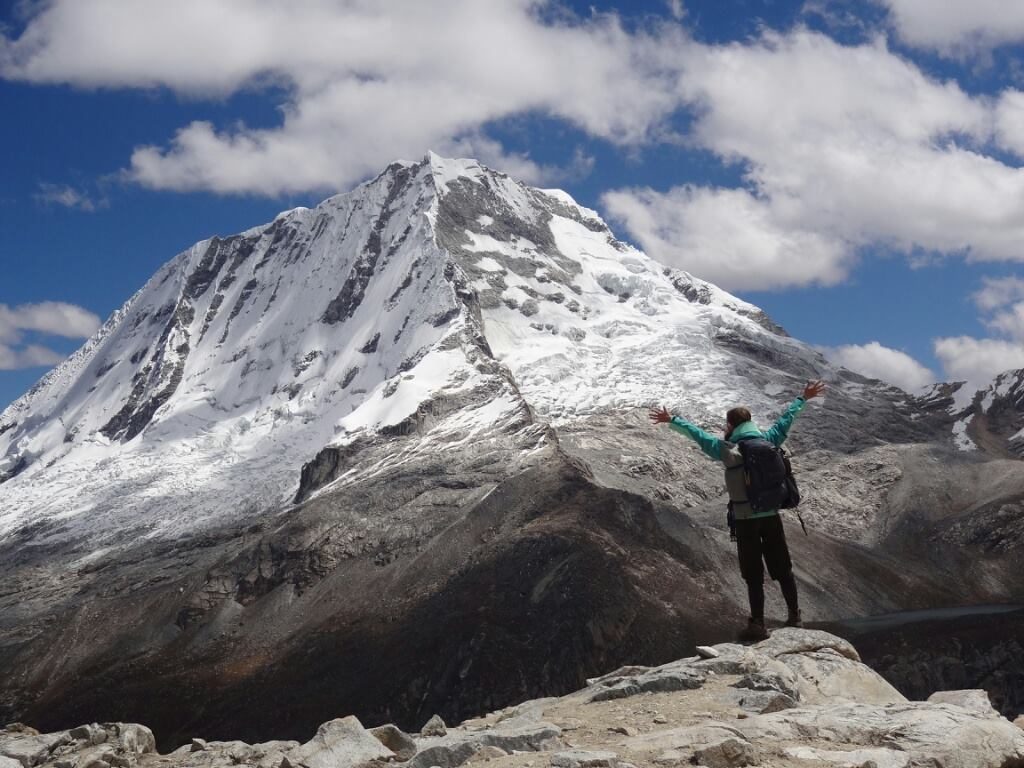
Further south in the Cordillera Blanca, many trekkers come to tick off the well-known Santa Cruz trek, which is brilliant but the experience that really stayed with Janie was the trek over the Huapi pass. She discovered this walk on a cycle tourist’s blog. The only indication of a possible route was a line sketched onto google maps. It involved a ‘dodgy’ taxi ride up an extremely bumpy road from Huaras city centre followed by a quiet walk up a long flat valley with only a local shepherd for company. After a cold night of camping at 4000 metres, Janie began a long, tough climb over rugged mountainside and across a huge boulder field.
Janie reached the top, 5000 metres, and was alone, in silence and surrounded by a host of 6000 metre peaks in perfect sunshine. The way down the other side was equally improvised. After a lot of scrambling and a few river crossings she sprinted back down the valley and hitched a ride back down to Huaras. By 9pm Janie was enjoying a well-earned meal in the comfy Cafe Andino.
The Cordillera Blanca is such an accessible trekking destination. You can choose to take a guide which is always advisable. The Huascaran national park entrance fee will cost you very little. Exciting adventures can be enjoyed and then down in the valley you have a number of towns with plenty of facilities and lots of local culture. Wander the markets and try the local food, drink Inca Kola and eat Sublime chocolate.
Janie recommends learning a few words of Spanish as your efforts will open up many conversations with local people and a chance to learn about their lives. Once you have done this, be prepared for a lot of questions! Peruvians are charming and welcoming but endlessly curious…How many children do you have? Aren’t you cold in your tent? Did you cycle here from England? Do you believe in God? Why aren’t you on a motorbike? Talk to the guides and the arrieros (donkey handlers). They are mountain people and seriously tough. You will learn about the legends and myths that make up their mountain culture; Pachamama (or Mother Earth) that you must respect to ensure fertility of the land, the white man Muki who will punish bad miners who take too much from the land and finally Pishtaco the white Boogeyman who preys on poor Indigenous villagers.
You can expect to enjoy the long periods of settled weather during July and August but remember the altitude and the freezing temperatures. Drink a lot but take care in the source and treatment of your water. Enjoy a cup of Coca leaf tea on your mountain trek to relieve any feeling of altitude but don’t be surprised to find a chicken foot in your soup! Be prepared that when you get off the beaten track, rice and chicken may be the only thing on the menu, along with the occasional guinea pig.
Allow time as the mountain roads demand it. Buses leave when they are full and don’t always run to set schedules or leave from the same place. Most of the time you will just stick out your thumb on the side of the road or negotiate a price with a local with a truck.
When you leave the touristy spots behind be prepared for the locals to shout “Gringo” (foreigner) a lot. It’s not a bad word, it just shows curiosity or a lack of understanding. Janie says that she was commonly called “gringita” (small foreign girl) or “flacita” (skinny little girl).
Be prepared for the huge contrasts in mentality, culture and behaviour between the indigenous populations of the rural villages and the mestizo (or mixed blood) folk of the bigger towns. Some will share your hobbies and passions while others will never have heard of England.
Read…you will be walking in the footsteps of many adventurers that have come before you. Their writing and your reading will give depth to everything that you are seeing. Try ‘8 Feet in the Andes’ by Dervla Murphy or ‘Cloud Road’ by John Harrison. Both are long physical journeys of slow and remote mountain travel.
By the time Janie arrived into Cusco, the famous Inca city in southern Peru and the gateway to Machu Picchu, she already had been completely amazed by this mountain nation and was still yet to see its most iconic site. The sudden appearance of so many tourists was a total shock to Janie.
Despite her long journey through the country Janie says there was still so much to see and do such as the high altitude Ausangate circuit, the trek to another spectacular but lesser known Choquequirao archaeological site, the summit of Volcano Misti near the deep canyon of Colca. Peru could easily tempt the keen explorer back again and again!
You can contact Janie for further information by messaging us through this page.
