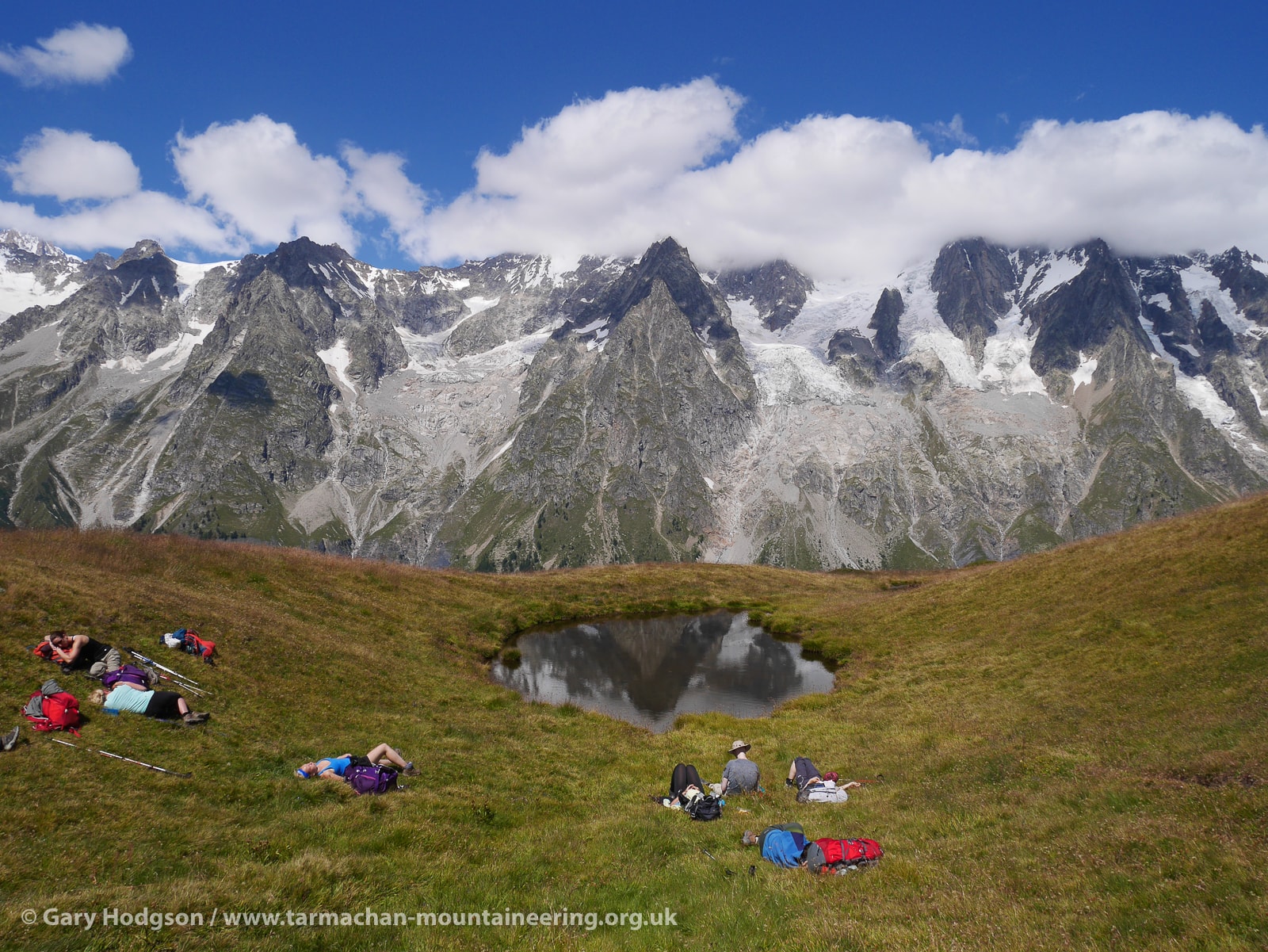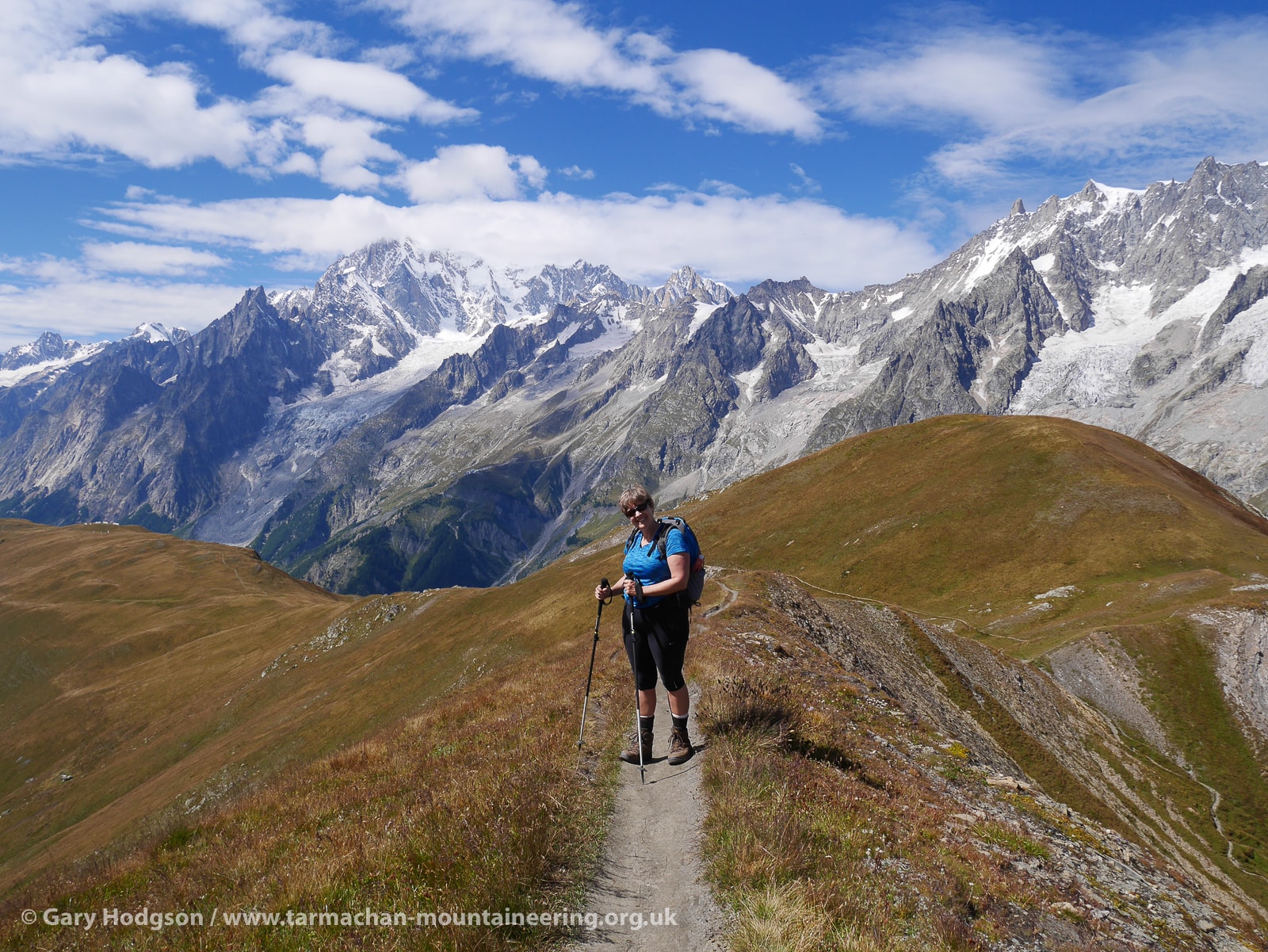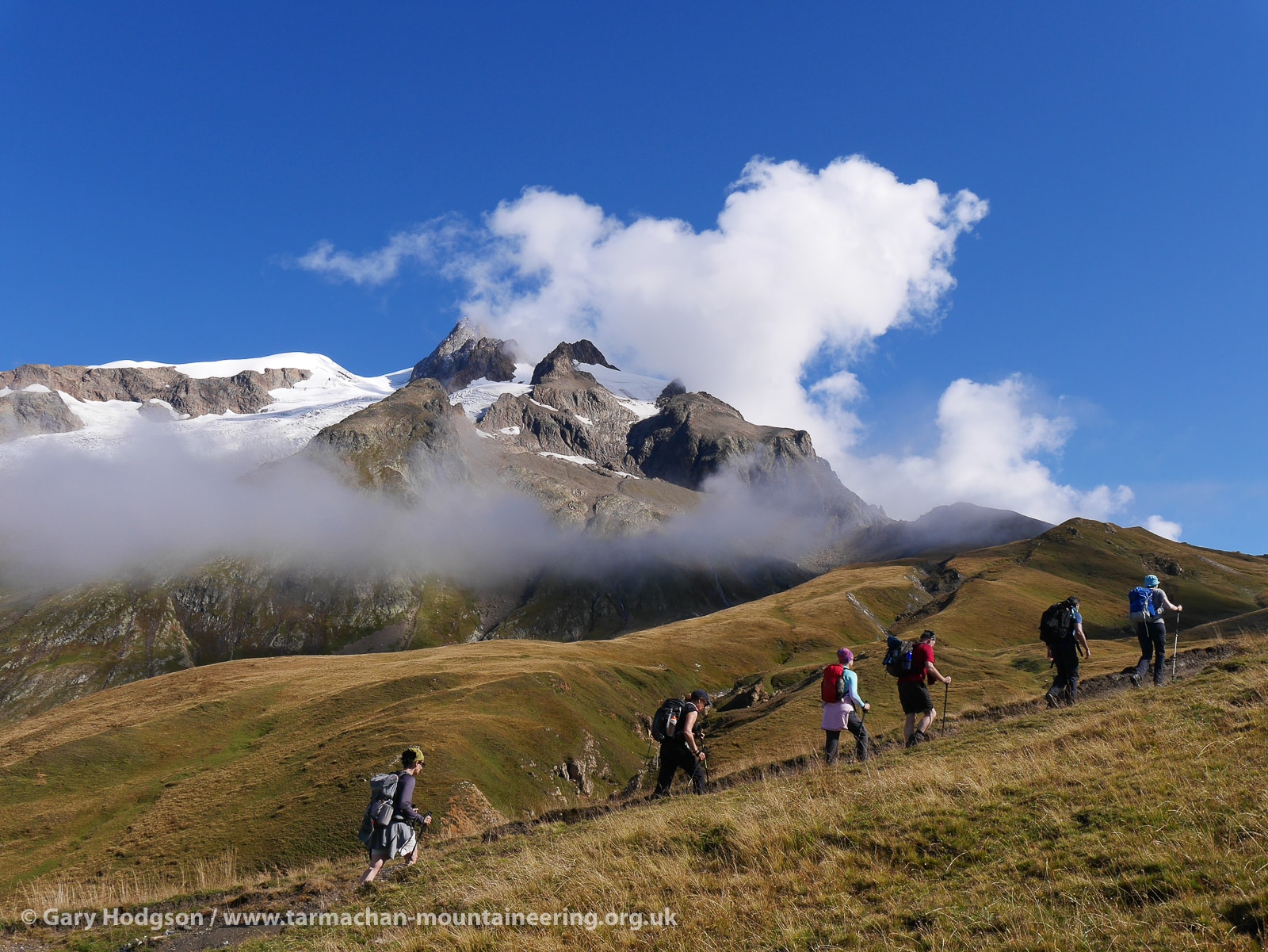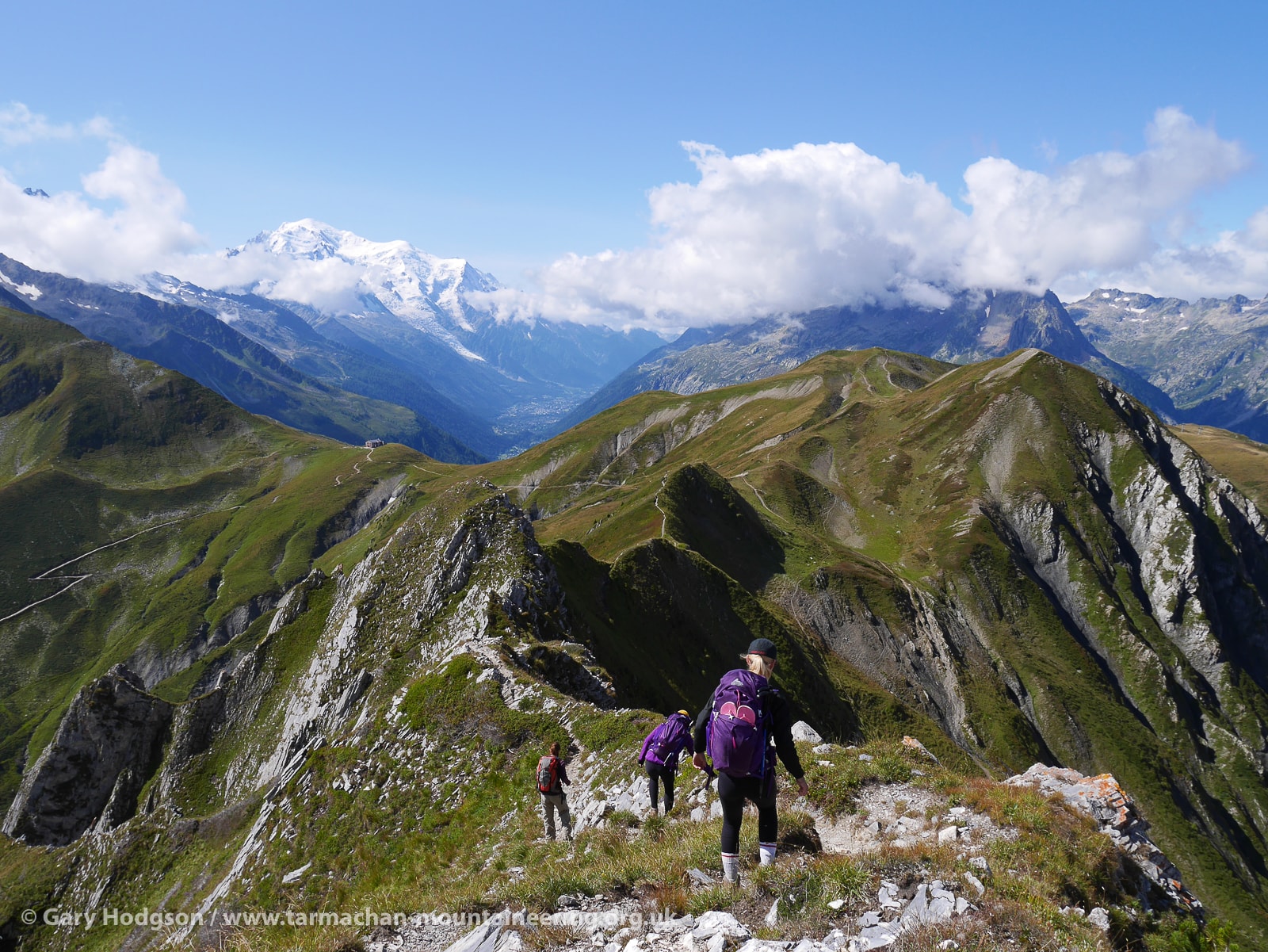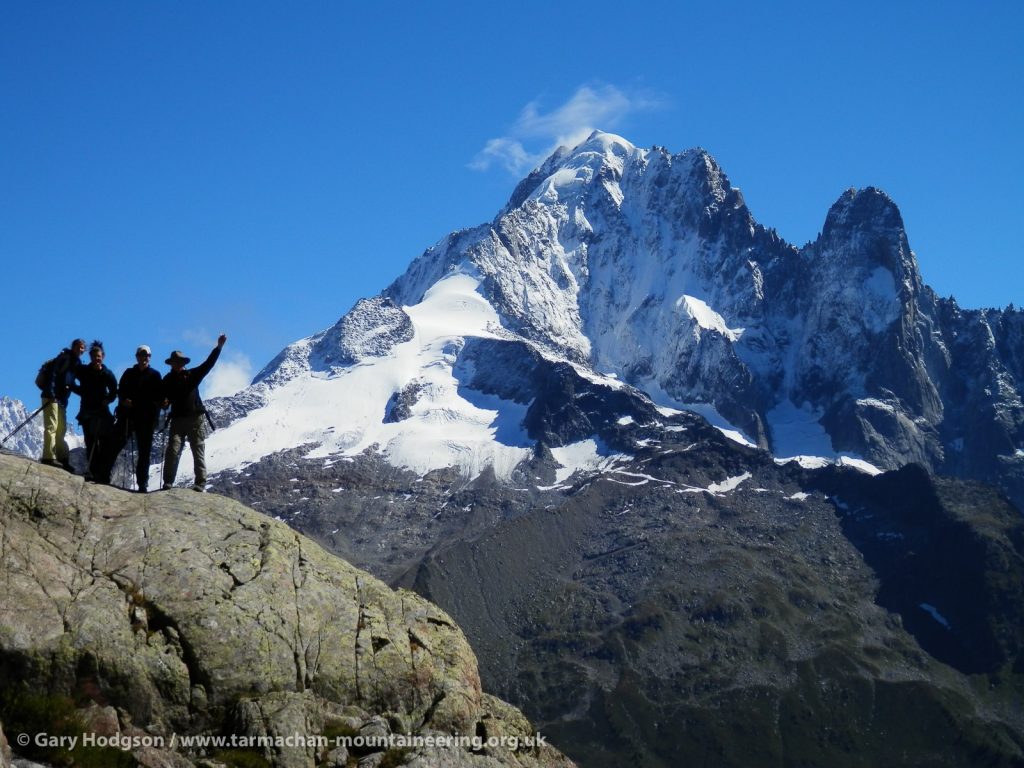
Without a doubt, the Tour du Mont Blanc is in the ‘Top 50 treks of the world’. Passing through three countries, you can see a magnificent array of landscapes and all in a relatively short distance on foot. This multi-day walk takes you through pinewoods, flower-filled Alpine meadows, valleys with centuries-old architecture then up to high ground with stunning views of glaciated peaks rising to over 4000m. There are few areas in the world where you can have such amazing mountain scenery with relatively little effort and yet be just a short distance away from civilisation. Another major attraction for many is that it is very well signposted and, with rudimentary navigation skills, it is possible to walk it unguided. But there are many reasons why hiring a guide is a very good idea.
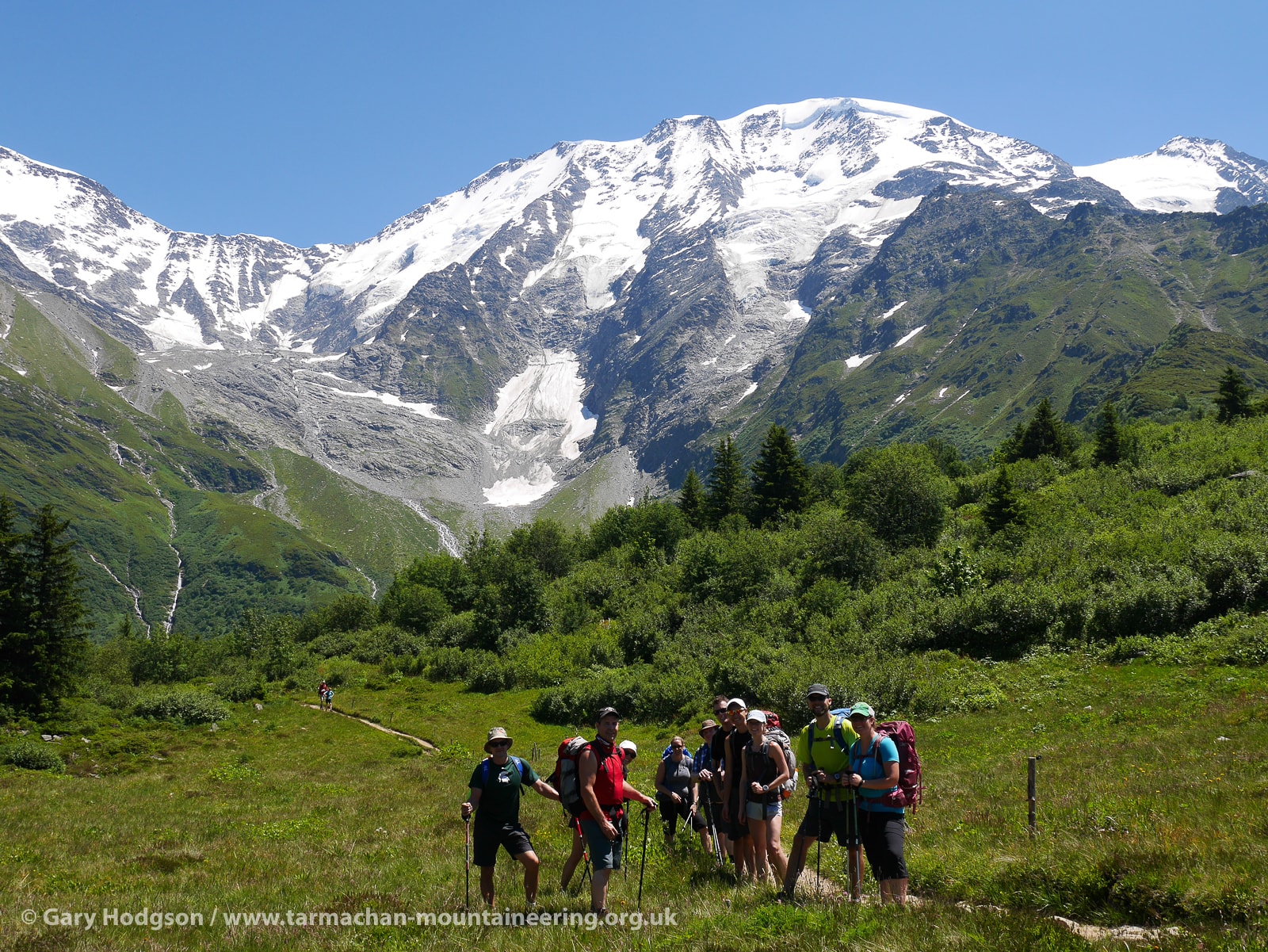
The Tour du Mont Blanc (TMB) has been an official long distance walking tour since the 1960s. An enormously popular circular trek around Western Europe’s highest mountain. The hike, if done in its entirety, covers over 170km with 11,500 metres of ascent. These figures vary according to the many ‘variant’ sections along the trek. With these statistics in mind, it’s certainly not a ‘walk in the park’ but with a good level of fitness and some prior walking experience it’s achievable for both old and young alike. Because of its popularity one draw back, or bonus depending on your perspective, is that it’s not easy to find solitude on the trail. Having said that, there are many times on some sections where you can enjoy an abundance of Alpine splendour all to yourself.
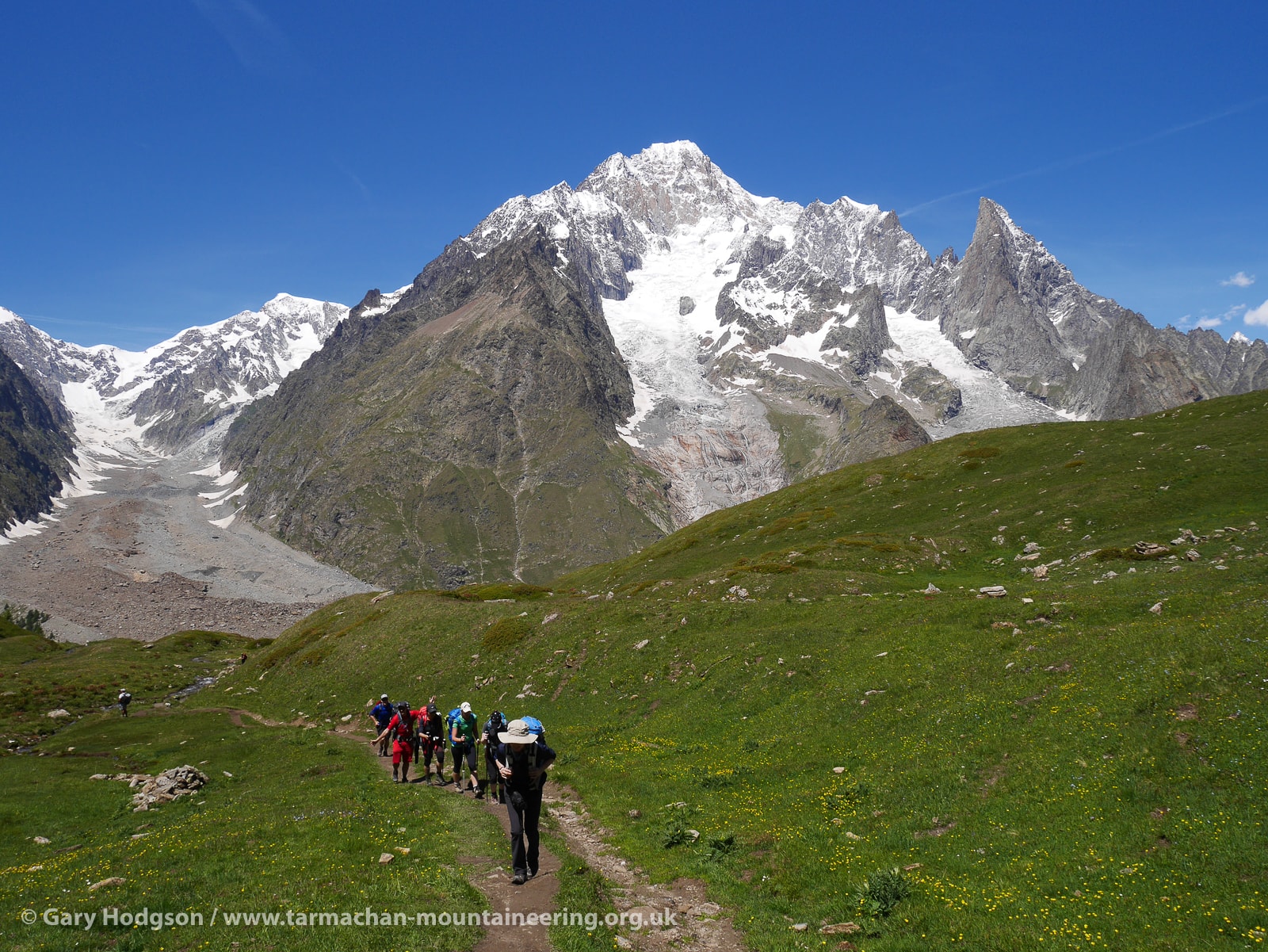
For many International Mountain Leaders, the TMB is their bread and butter work during the summer months in Europe. From mid June to end of September (the main Alpine summer trekking season) there seems to be plenty of work opportunities for guides. Over the course of the last 11 summer seasons, Gary has guided the TMB on more than 50 occasions. Gary’s explains that most of the trekkers aren’t your hardcore outdoor types who regularly hike around the world. For many this will be their first ‘big walk’. Gary has taken individuals who have had no prior walking experience on mountain terrain. As with guiding any groups anywhere in the world, it’s not just about getting your group from A to B every day in one piece. There is far more to it than that. With groups of up to 12 people there is a lot to manage: catering and accommodation issues; varying fitness levels within the group; group dynamics and most importantly, their holiday expectations. For some it is purely a challenge, for others the aim is to enjoy the historical, cultural and culinary aspects of France, Switzerland and Italy, while others just love to walk, meet new people, and have fun! Of course, for many it is the very specific lure of one of the finest mountains in the world, the iconic Mont Blanc.
The main advantage of signing up for a guided tour is that you avoid all the hassle of booking and managing accommodation as the admin staff and the leader will do all this for you. On top of that, the guide is a great source of advice, direction and support, from telling you what time to get up in the morning, to making sure your bread is gluten-free, to what variety of saxifrage you’re looking at or where a particular cheese comes from. Perhaps, more importantly, is that they keep you up-to-date with the latest weather report, the best way to keep warm and dry, as well as how to tackle a difficult bit of trail. The guides are also fully trained first aiders in the event that something goes wrong.
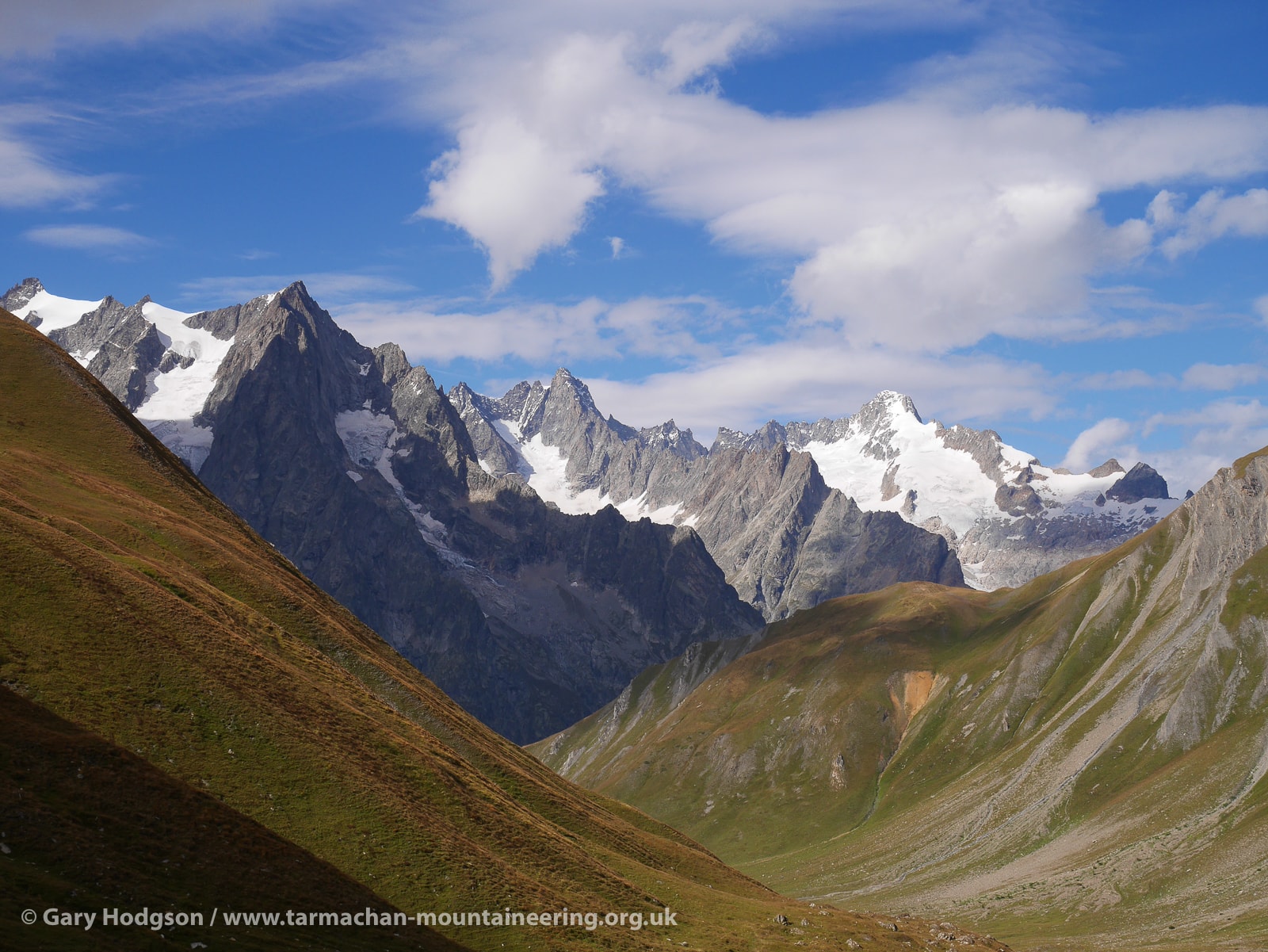
In terms of guiding on the TMB, customers really appreciate the expert knowledge of an IML. Knowing how long it’s going to take to the next break, what the terrain is going to be like, where the best viewpoints are, where they can see wildlife, where the toilets and drinking water spots will be and of course how far it is to the end of that day’s walk. Getting to know the people who run the hotels, hostels and huts is key to guiding a successful trip. The group’s enjoyment and wellbeing on and off the trail are vital. For many, the food, showers, beer, and bed at the end of the day are as important as the walking. Choice of lodging can range from camping with simple, rustic food all the way up to 4-Star Hotels and haute cuisine with swimming pools and spas. There is something for everyone’s taste and wallet!

The weather on the TMB is typically ‘Alpine’ most of the time with plenty of sunshine, no winds and the odd late afternoon thunderstorm. Normal attire for walking is a T-shirt and shorts. However, it is when the weather becomes unseasonable that the leader’s skills on the hill really kick in. Keeping everyone’s morale buoyant when they’re facing a long 8 hour day in the rain, cooler temperatures and nothing to see but cloud can be challenging. Underfoot conditions can be very different too. With heavy, constant rain a good trail can become slippery and unpleasant. The last few seasons in particular have seen the Alpine regions still with a covering of deep snow above 1800m from mid-June until mid-July. The Alpine winter can extend into Spring and beyond. So how do you get your group with limited mountain walking experience, wearing summer boots with snow underfoot to your next destination? You have to be prepared to deal with some trepidation. Gary explains that “teaching groups how to walk in summer snow is fun for me as I love the winter environment and I am in my element. Some people really take to it and it’s very satisfying to see people who are initially terrified discover that they really enjoy it.”
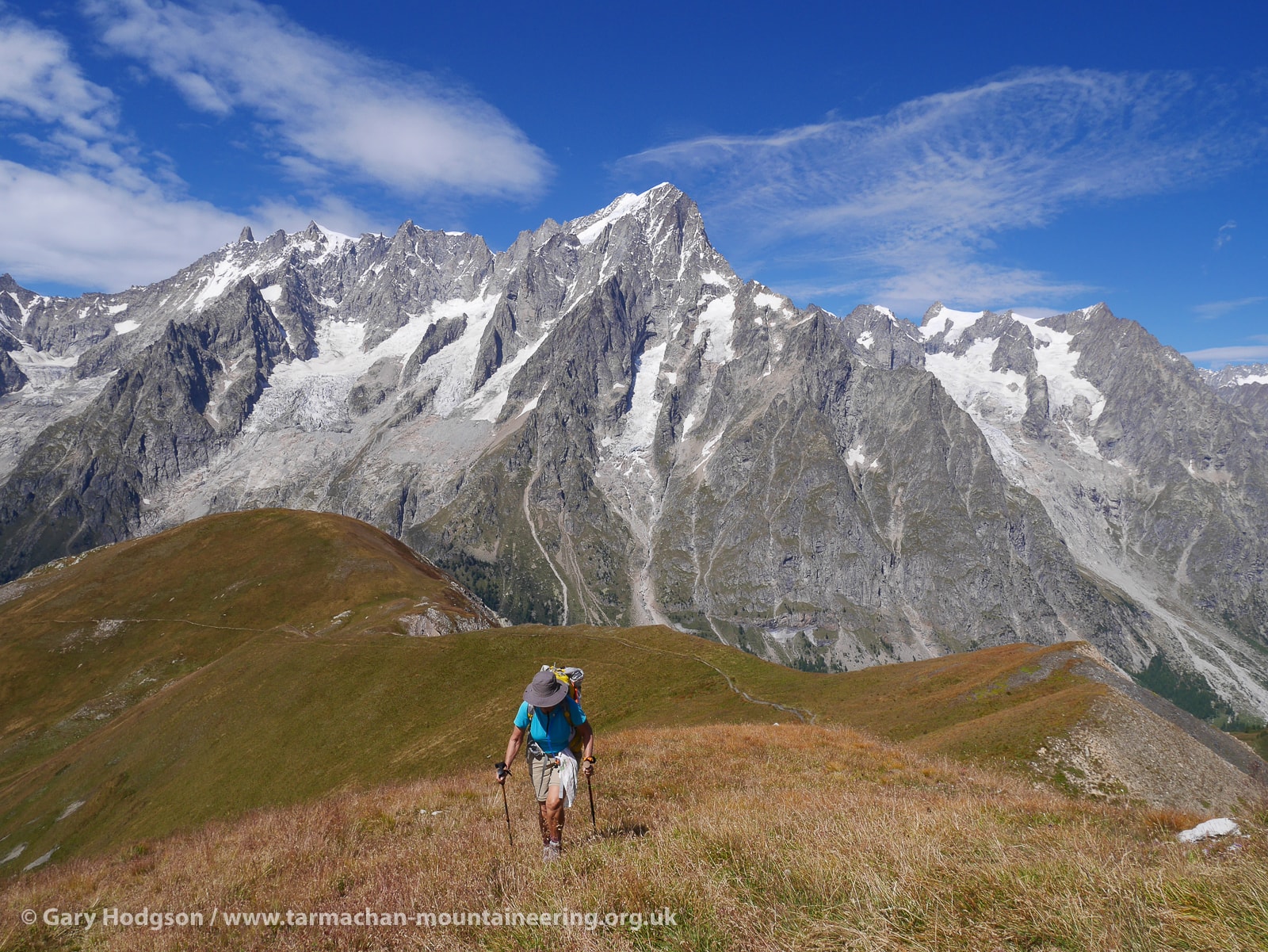
As a guide, you continually have to make decisions and adaptations to the conditions, the personalities, and the mood of the group. Inspiring confidence in individuals who may be struggling with their fitness and/or ability is the norm in most groups, but this is enormously rewarding and is one of the reasons why Gary would thoroughly recommend this trek to guides and walkers alike.