

IML Alison Rowsell has recently written a guide book for Cicerone Press about the Jura Crest Trail, Switzerland.
The Jura Crest Trail is one of seven national walking trails in Switzerland, traversing some of the oldest mountainous areas of the Alps, running parallel with the Swiss-French border. Also known as the Jura High Route (Swiss National Route 5), the 310km long-distance route traverses the sub-alpine mountains of the Swiss Jura from Dielsdorf near Zurich to Nyon on the shores of Lac Léman (Lake Geneva).
With over 13,500m of ascent, the trail demands a moderate level of fitness, on easy hiking trails (Wanderweg), with only one stage containing a section of Bergweg (‘mountain’ trail) due to the exposure along the ridgeline (optional, easy to skirt around). Therefore the trail is easily accessible to most and a great starting point for future alpine adventures.
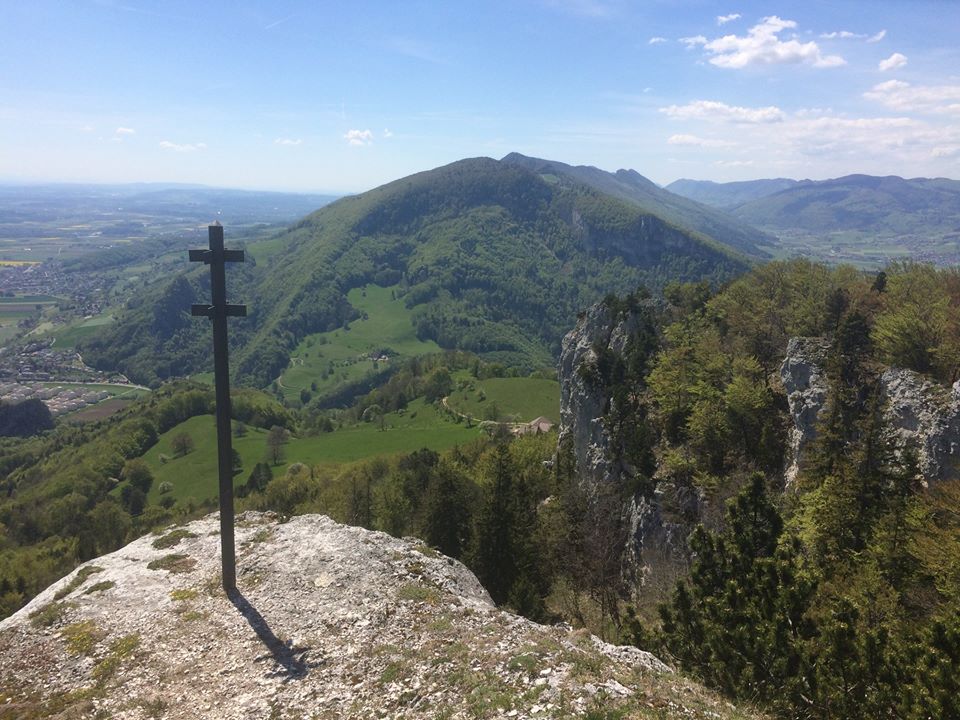
The Jura mountains form a range of ancient folded strata creating an arc from the Rhine Valley in the north-east to the Rhône valley in the south-west, along the border between Switzerland and France. The route is a rolling showcase of natural features including deep gorges, mountain streams, glistening lakes (including the highest mountain lake in the Jura), tranquil forests, extensive alpine pastures and craggy exposed cliffs.
How easy is it to plan a trip?
With international airports, serviced by budget airlines, at either end of the trail (Zurich 15km, Geneva 26km), alongside the reliable Swiss railway system and local post-bus routes over mountain passes, accessibility is fundamental in providing the day-hiker and weekender with ease of travel throughout.

The day-to-day journey can be a challenge with up to 32km of trails and 1700m of height gain in one day should you follow the recommended Cicerone guidebook (Jura Crest Trail (945). When you take in the immense views of the Jura range, the peaks and ridges of the Alps on the horizon, and across the Rhône valley, the sense of achievement more than compensates for the distance and height gained.
When is it best to go?
The best time of year to walk the Jura Crest Trail is between May and September when more accommodation options and transport links are available. The Jura is famed for its wild flowers, which can be seen from early as March with spring gentians and crocus carpeting the hillsides, to the spookily beautiful skeletons of thistles and pasqueflowers in the autumn.
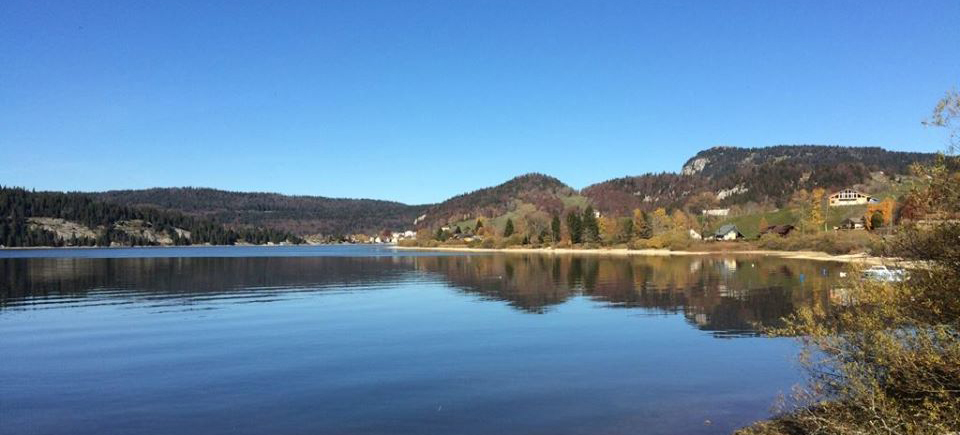
Snow can fall as late as April and as early as October, leaving the highest parts of the trail hidden during spring and autumn. In winter, it becomes and IML’s best friend, with rolling Nordic terrain offering extensive opportunities to practice for their winter training and assessment, or to set up and establish snowshoe routes for clients. Cross-country skiing and ski touring are very popular throughout the Jura, again offering opportunities to develop winter skills as well as enjoy stunning scenery.

For the wild camper or adventurous IML who does not mind mountain huts, year-round activities can take place. The Club Alpine Suisse (CAS) has a selection of mountain huts along the route, most of which are unmanned, although access is available if you contact them in advance.
What alternative activities are there on or near the trail?
Due to its close proximity with the border of France, the southern Jura was heavily guarded during World War II, of which many defences can still be seen. Allied Prisoners of War, Jews and smugglers made use of hidden routes to cross the Jura mountains, into the safety of Switzerland. Several museums along the route can be visited, as well as trails, retracing the steps taken by the escapees.
Geologic wonders are extensive throughout the Jura, with the Creux du Van (1463m), Aiguille de Baulmes (1559m) and Dent di Vaulion (1483m) being the most iconic. The Creux du Van sits above the town of Noiraigue, a perfect example of Jura limestone with an impressive 160m-high vertical rock wall amphitheater within a 1km-wide valley.
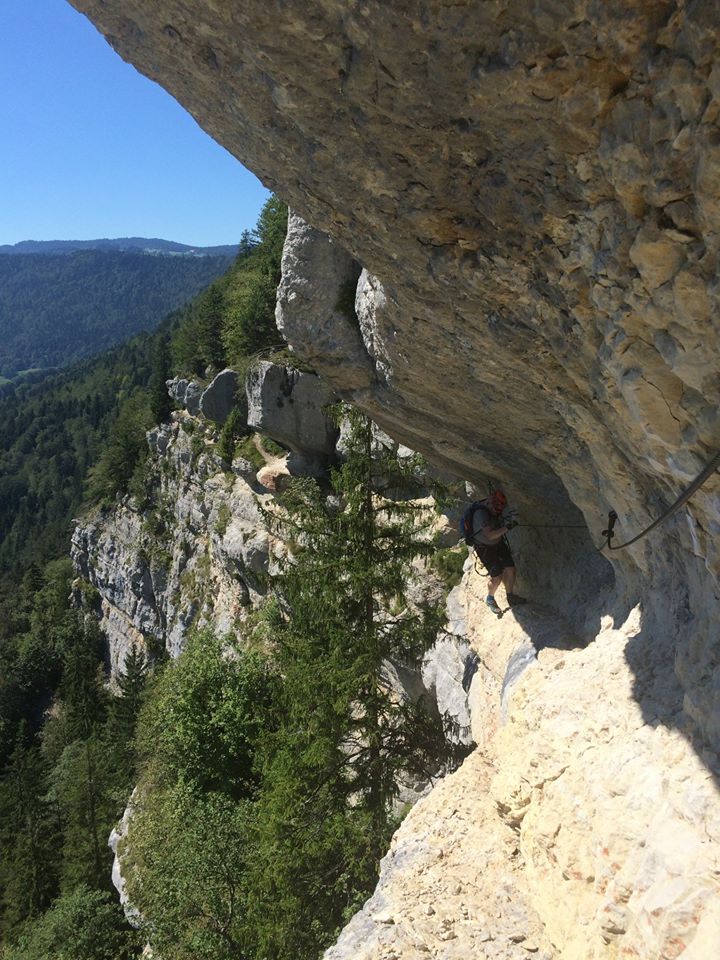
The Jura is famous for having up to 950 flowering plant species alongside extensive forests due to its limestone base, leading to a variety of local, and famous, liquors and cheeses being produced. The southern end of the Jura is famed for its yellow gentian liquor and Vacherin Mont d’Or cheese, both of which can be seen being produced in the small village of Les Charbonnieres, near Vallorbe. Also found in the area is the Grottes du Vallorbe, an extensive underground cave system alongside the Juraparc, an outside animal reserve with bears, wolves and bison.
Where can you purchase Switzerland’s Jura Crest Trail from?
Switzerland’s Jura Crest Trail (945) is published by Cicerone (January 2019), and can be purchased online through Cicerone, or from leading bookshops, both online and on the high street.
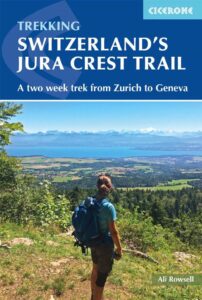
ISBN: 9781852849450
https://www.cicerone.co.uk/switzerland-s-jura-crest-trail
For further information on the Trail and writing travel guides and literature, feel free to contact me.
Alirowsell@gmail.com

Thank you Ali! You can read what it takes to become a guidebook author here
