

Jotunheimen, Norway by International Mountain Leader Peter Chapman
Jotunheimen is an accessible mountain range of breath-taking natural beauty that is protected from the negative ingress of modern society – as are all national park areas in Norway. You can pick the terrain to suit ability and experience from easier hut-to-hut trails that are clearly way-marked to adventurous mountain outings that require a wider skillset such as glacier crossings, ridge scrambling and wild camping away from civilization.
How easy is it to get to?
One fantastic thing in Scandinavia is that the public transport system simply works and because outdoor activities are a huge part of the Norwegian lifestyle from an early age, national parks like Jotunheimen are well-served by public transport. When arriving from abroad, fly to one of the Oslo airports, ideally Gardermoen, which lies north east of the capital. From the airport take a train or bus north to Otta. At Otta you will need to change to a bus to continue to the town of Lom (some of the long distance buses allow a direct connection). Lom is the main settlement serving Jotunheimen and is a wonderful alpine village in itself with all the amenities you could possibly need including sports shops, banks, supermarkets, the national park museum, an 830 year old wooden stavkirke and last but not least, one of the best bakeries and cafés in the world – Bakeriet i Lom. During the summer months, there are also daily bus routes linking Lom with the mountain huts at Spiterstulen, Leirvassbu and over Sognefjellsveien. Alternatively, southern and eastern Jotunheinmen can be accessed from Gjendesheim and Fondsbu via Fagernes – again with bus connections during the summer season. For trains see www.nsb.no and busses www.nor-way.no, www.fjord1.no and www.opplandstrafikk.no.
Can you tell us about the most memorable moment of a recent trip?
I have been lucky enough to enjoy many memorable times in Jotunheimen and that is why I keep going back. Beginning in the late 1800’s William Cecil Slingsby visited the area more than 20 times at a time when one had to sail over and ride by horse and carriage. He was attracted by the beauty and wilderness – and by the unclimbed summits. He climbed with local mountaineers and raced with them and against them to claim the highest peaks. His book ‘Norway: The Northern Playground’ is well worth a read. For me, I share the same attraction and I am busy ticking off the 130 summits in Norway over 2000m, of which 101 are found in Jotunheimen.

What are your top tips for anyone travelling to this area?
I have been visiting Jotunheimen for 20 years and most times I have been blessed with good weather during July, August and September, so sunscreen and lip balm are very important, even for the guys. On the other hand, make sure you have a warm layer and a good set of waterproofs, gaiters and waterproof boots. All the mountain huts have good drying facilities. Travel light, travel quietly and leave no trace.
What else is there to do, other than mountaineering, in this area?
There is a huge palette of activities in the area for all tastes including fresh water fishing in the lakes and rivers (permits can be bought in the mountain huts and sports shops), rock climbing, via ferrata, guided glacier tours, river rafting, cycling, caving, browsing museums and archaeological sites, photography and simply relaxing.
Are there any dangers or annoyances here?
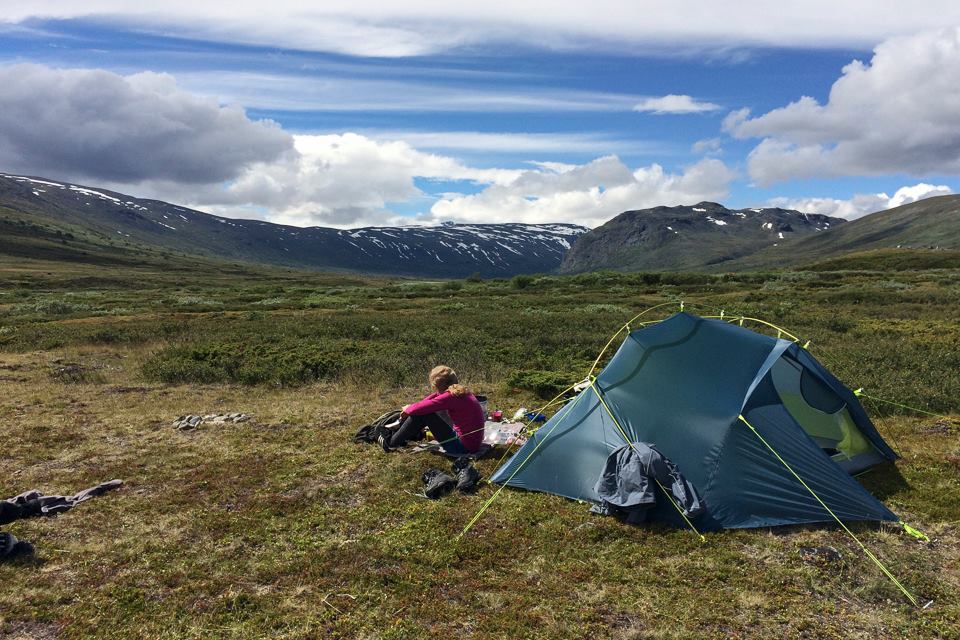
The days of wild bears roaming the area disappeared in the early 1900’s so the only thing left that can give rise to discomfort is the mosquito. However, I always try to be (and camp) above 1000m which usually solves the problem. If you stick to the marked trails then there are few risks underfoot, however if you venture away from the marked trials, the area is suddenly very remote and with limited phone coverage.
With the warming climate, the glaciers and related terrain are undergoing enormous change including landslides, loose boulders and unusual water levels in the rivers. The winter of 2017-18 was a record year in Norway for snowfall, however, the tremendously hot early summer months of 2018 negated this by a long way.
Some might think the prices in Norway are annoying and as an example, you may give £15 for a can of beer in a mountain hut. Typically a night in a dormitory will cost £30, 3-course evening dinner £30 and breakfast £13 (helpension typically £60-120 per person per night depending on the quality of the room from dormitory to single room with en-suite bathroom). That said, the huts are of a very high standard and the food is exceptional.
What one piece of kit could you not manage without on a trip like this?
I always use walking poles to ease the pressure on the knees. Distances in Jotunheimen are long and parts of the marked trails are quite rocky underfoot. In a nutshell, make sure you have prepared for a walking holiday with day walks of at least 12 miles, most trails are 16-24 km in length, and make sure you have well-fitting robust walking boots. Bring a sheet sleeping bag and travel towel for the huts.
How do people contact you if they want to find out more?
I have a website with a lot of information and photographs from Jotunheimen www.mountain-environment.com and I can be reached by e-mail on guide@mountain-environment.com. I run tailor made mountain walking and photography holidays summer and winter.
Thank you Peter!
